Second Life, First Choice: Fitting Out a UK Office with Reused Furniture
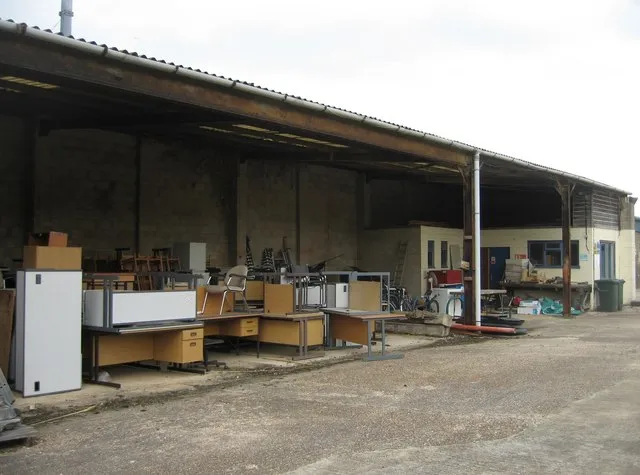
Photo: Sebastian Ballard, CC BY-SA 2.0, via Wikimedia Commons
An office refit can be a moment of renewal: better storage, more comfortable seating, a layout that suits how the team actually works. It can also be expensive and surprisingly wasteful. Desks, chairs, cabinets and partitions are often replaced while they still have years of service left, and the carbon embodied in those items is lost when they are skipped.
For UK SMEs, a reuse refit is not about making do with tired furniture. It is about buying more carefully. By auditing what you already own, repairing what can be repaired and sourcing remanufactured or second-hand items from local suppliers, it is often possible to cut costs, reduce waste and create a workspace with more character than a standard catalogue fit-out.
Audit before you buy
Start with a walk-through. List every item of furniture by type, quantity, age, condition and location. Note what works and what does not. A chair may be uncomfortable because the gas lift has failed, not because the chair is finished. A desk may be sound but the wrong size for a new layout. Storage may be plentiful but poorly distributed.
Involve the people who use the space. Ask which items they would keep, repair or replace, and why. This helps avoid the common mistake of buying new furniture to solve a problem that is really about layout, lighting or storage access.
Apply a simple hierarchy: prevent unnecessary purchases, repair what can be repaired, then consider remanufactured or refurbished items, then second-hand items in good condition, and only then new products with strong circular credentials. Recycling should be the last resort, not the first.
Source locally and ask for provenance
Reused office furniture is available from several UK channels. Local council reuse hubs and waste sites sometimes resell office items. Charity furniture shops, office clearance specialists, ex-display sellers and remanufacturers of task chairs and desks are other options. Remanufactured furniture is particularly useful for SMEs because it often comes with a warranty and a known specification, while still avoiding the carbon and cost of a new product.
Ask suppliers where the item came from, what has been replaced, what is still original and what warranty applies. For upholstered items, ask about fire safety documentation and compliance with the relevant contract furniture standards. For electrical items such as sit-stand desks or task lighting, confirm PAT testing and safety checks. A low price is not a saving if the item cannot be insured, maintained or safely used.
Distance matters, but it is not the whole story. A local supplier with a good warranty may be a better choice than a distant one with a slightly lower headline price. Ask for delivery costs, installation costs and expected delivery dates before comparing quotes.
Compare cost and carbon without fantasy maths
A credible comparison looks at total cost of ownership, not just the purchase price. Include delivery, installation, warranty, maintenance, replacement parts and disposal of old items. For carbon, use supplier figures where they exist and recognised estimates where they do not. Label estimates clearly and avoid claiming precise savings that the evidence cannot support.
The table below is illustrative only, but it shows the shape of the comparison an SME might make.
| Item | New purchase | Reused or remanufactured |
|---|---|---|
| 20 task chairs | £4,000–£7,000 | £1,600–£3,500 |
| 10 desks | £2,500–£4,500 | £900–£2,200 |
| Delivery and installation | £600–£1,200 | £500–£1,000 |
| Estimated embodied carbon | Higher | Typically lower, but verify the basis |
The carbon benefit comes mainly from avoiding new manufacture. It is strongest when items are used locally, repaired rather than replaced and kept in service for longer. The financial benefit is strongest when the business avoids storage costs, disposal fees and the temptation to buy temporary furniture that will be replaced again in two years.
Avoid common procurement pitfalls
Check the lease before you buy. Some landlords require approval for alterations, deliveries or changes to furnished space. Fire safety is another consideration: upholstered furniture in commercial settings may need to meet specific standards, and the evidence should be available before installation. Insurance may also depend on safe electrical equipment and compliant furniture.
Be realistic about condition. Photographs can flatter. Ask for dimensions, finish samples where relevant, and a clear description of any marks or missing parts. Confirm who is responsible for delivery, assembly and removal of packaging. If you are buying a batch of chairs, ask whether spare parts are available and whether the model is still supported.
Do not overlook the cost of time. A reuse refit can require more coordination than a single catalogue order. Appoint one person to manage the inventory, supplier questions and delivery schedule. A pilot in one room or one team area can reveal problems before the whole office is committed.
Make the case to landlords and teams
Landlords often respond well to a clear plan. Explain what will change, how fire safety and insurance will be managed, and how deliveries will be handled. Point out that reuse can mean fewer vehicle movements, less waste and a fit-out that is easier to reverse at the end of the lease.
Teams are usually persuaded by comfort and character as much as by carbon. Show them the items you are considering, explain the savings and be honest about the trade-offs. A reused desk with a few marks may be perfectly practical, but staff should know what to expect. Pair the refit with good lighting, plants and a sensible layout so the result feels considered rather than improvised.
A practical route map
First, audit the existing furniture and agree what stays. Second, set a budget and a simple carbon baseline. Third, approach local reuse and remanufacturing suppliers with a clear specification. Fourth, compare total costs and evidence, not just headline prices. Fifth, pilot the approach in one area. Sixth, measure what you saved and tell the story accurately.
A reuse refit will not suit every item. Ergonomic seating, fire safety and electrical compliance are not areas for false economies. But for many UK SMEs, a mixed approach works well: repair the best of what you own, buy remanufactured where warranties matter, and source second-hand items where condition and provenance are clear. The result can be a greener office, a healthier budget and a workspace that feels less generic than the alternative.