Weeds Worth Keeping: Turning an Unloved Business Park Verge into a Measurable Habitat
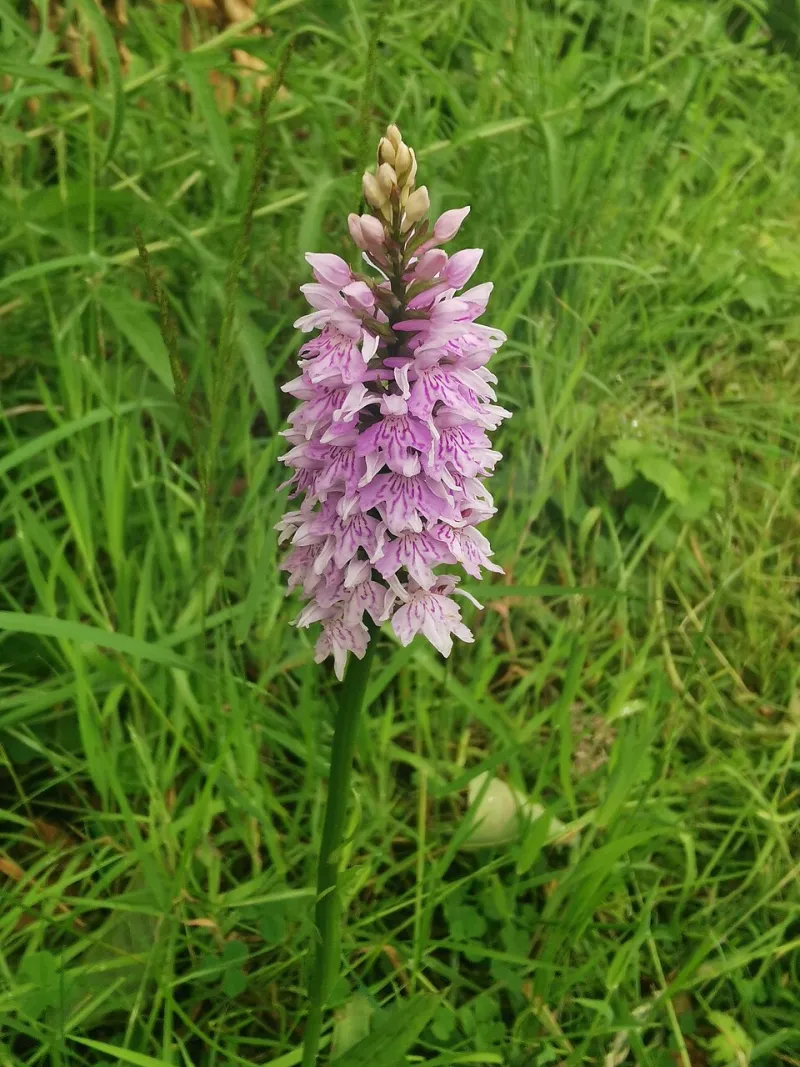
Photo: Blood Red Sandman, CC BY 4.0, via Wikimedia Commons
Walk around the back of almost any small UK business park and you will find the same scene: a strip of grass between the car park and the boundary fence, mown flat by a contractor on a fixed schedule, scattered with dog waste and the occasional pallet. It is not a nature reserve. It is, however, the cheapest piece of ecological real estate your organisation will ever control, and it is already doing more than you think.
The case for doing something with it is not sentimental. Staff retention, planning conversations, customer questionnaires and increasingly the procurement portals of larger clients all reward firms that can point to something concrete on the ground. A verge will not offset a fleet, but it gives you a baseline, a place to start, and a story that is genuinely yours rather than a certificate bought from a third party.
Begin with what is already there
Resist the urge to order a wildflower seed tin in the first week. Spend an hour instead, ideally in late spring and again in high summer, walking the boundary with a notebook and a phone camera. Note the obvious: is it ryegrass and dock, or is there ribwort plantain, hawkweed, selfheal, birds-foot trefoil? Are there ants' nests, a bank of ivy on the fence, a rainwater gully that never dries out? Is the strip waterlogged in February and cracked in July?
That rough sketch is your baseline. It matters for two reasons. First, it tells you which interventions will fail — seeding a wildflower mix onto dense ryegrass in heavy clay is an expensive way to feed pigeons. Second, it gives you something honest to compare against later.
If you want a second opinion, your local Wildlife Trust often runs business supporter schemes, and a county recorder or local natural history society will usually answer a polite email with photographs. You do not need a consultant for a site this small.
Permission, service charges and the small print
On a leased site, the ground outside the door is rarely yours to dig. Check the lease for grounds maintenance obligations and, crucially, whether the cost sits in the service charge. There is no point agreeing a reduced mowing regime with the landlord if the contractor is still invoiced for twelve cuts a year and the saving disappears.
Write to the landlord or managing agent with a short, specific proposal: a defined area, a defined change, a trial period of one growing season, and a note on insurance and sightlines. Offer to keep a mown edge, which addresses almost every objection about tidiness, and to reinstate the original regime if the trial disappoints. Agents are far more receptive to a temporary, reversible request than to a permanent one.
Two practical constraints to flag early. First, visibility and safety: keep corners at junctions and any pedestrian desire lines cut short, and check whether your insurer or the estate's risk assessment says anything about concealed areas. Second, invasive species. Japanese knotweed, Himalayan balsam and giant hogweed are not projects, they are liabilities, and giant hogweed sap causes serious burns. If you suspect any of them, stop and take advice before anyone touches the strip.
Three interventions that survive a British year
The most reliable gains for a small site are structural rather than floral, and they cost very little.
A reduced mowing zone with a mown edge. Pick a rectangle at least three metres deep, agree a single cut in late summer with arisings removed, and leave the rest of the site as it was. Removing the cuttings is the step most often skipped and the one that does most of the work, because it gradually starves the coarse grasses that crowd everything else out.
A deadwood and brash pile. Ask the contractor to stack prunings in an out-of-sight corner rather than shred them. Rotting wood supports beetles, fungi and, in time, hedgehogs and wrens. It costs nothing and requires no maintenance, though it should sit away from buildings for fire and damp reasons.
A gap in the fence. A single thirteen-centimetre square hole at ground level, agreed with the neighbour, reconnects fragmented habitat for hedgehogs and amphibians. It is the least glamorous intervention available and frequently the most effective.
If you want flowers, buy a native plug mix suited to your soil type from a UK supplier with a provenance statement, plant in autumn, and accept a two-year establishment period. Avoid seed mats and 'bee bomb' products that mix species unsuited to your conditions.
Measuring without turning it into a science project
The temptation is to over-engineer. You do not need a quadrat grid and a spreadsheet of Latin names. A workable minimum is three things: fixed-point photographs taken from the same spot each quarter, a flowering-species list updated twice a year, and one pollinator count in June or July.
The pollinator count can follow the Flower-Insect Timed count method used by the UK Pollinator Monitoring Scheme: stand still for ten minutes in good weather, count the insects landing on flowers within a defined patch, repeat three times over the season. It is crude, it is standardised, and it is repeatable — which is what makes it useful.
Record the date, the weather and who did it. A single year tells you little; three years of the same method tells you something real.
Talking about it without overselling it
Once you have data, the temptation swings the other way and the language inflates. Phrases such as 'rewilding', 'carbon offsetting' and 'biodiversity net gain' carry specific meanings, and using them loosely invites the wrong kind of attention — particularly now that green claims are under closer scrutiny.
A defensible sentence looks like this: 'Since spring 2025 we have left a 60-square-metre strip of our car park boundary uncut, apart from one late-summer cut, and recorded 14 flowering species there in July 2026, up from six in the baseline survey.' That is dull, verifiable, and far more persuasive than a claim about saving the planet.
Keep photographs, dates and the name of whoever recorded the observations. If a client asks for evidence, you can supply it in five minutes.
A rhythm you can actually keep
A workable calendar looks unremarkable. Survey and photograph in April. Plant plugs in September. One late-summer cut, arisings removed, in August or early September. Pollinator counts in June and July. A short review with the landlord each November, before the following year's maintenance schedule is set.
Put one person's name against it. A verge with an owner survives; a verge that belongs to everybody quietly reverts to twelve cuts a year and a scattering of pallets. The gains are modest and local, but they are real, they are yours, and they cost less than a single team away day.