Meter to Tap: Building a Water Audit That Pays for Itself in a Small UK Workplace
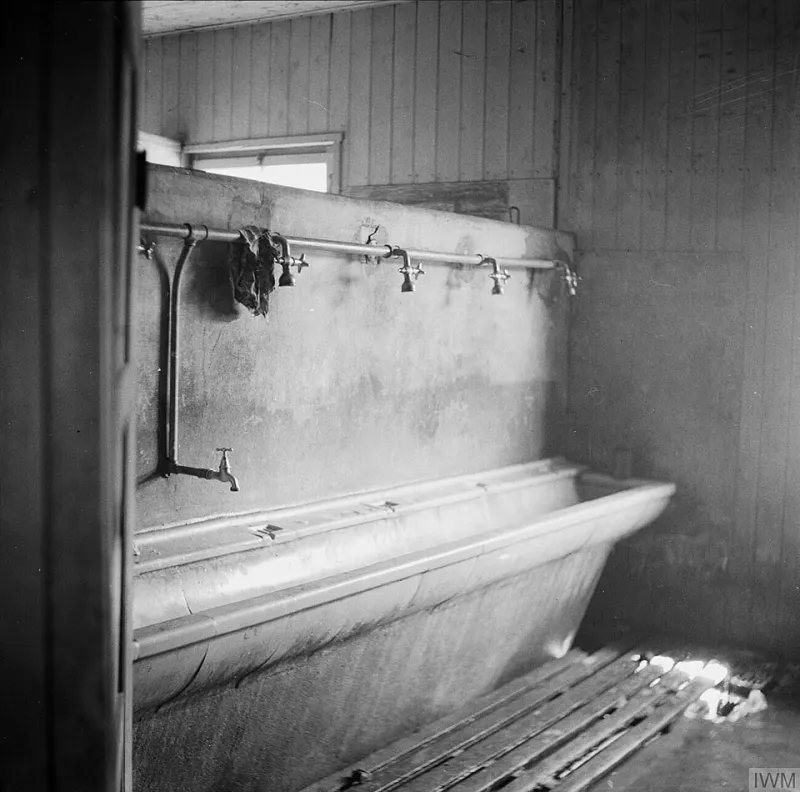
Photo: No 5 Army Film & Photographic Unit, Oakes, H (Sgt), Public domain, via Wikimedia Commons
Water rarely appears on a small firm's risk register. It arrives in the same envelope as waste and electricity, gets coded to facilities, and is paid without discussion. Yet for a workplace with toilets, a kitchen and a cleaner, consumption is one of the few overheads that can be cut materially with a clipboard, a jug and a couple of hours of attention.
The aim here is not to produce a glossy environmental statement. It is to establish what normal looks like for your premises, find where the litres are going, and spend money in the order that recovers it fastest.
Start with the bill, not the washroom
Before walking the building, assemble twelve months of invoices and confirm three things. First, that the meter serial number on the bill matches the meter on site, and that it serves only your premises. Shared supplies and inherited meters are a common source of quiet overpayment.
Second, understand the tariff. Most business bills in England and Scotland combine a standing charge, a volumetric water charge, a sewerage charge based on a high proportion of the volume returned to the drain, and a surface water drainage charge. That last element is frequently overlooked: if rainwater from your site drains to a soakaway rather than the public sewer, you may have grounds to ask for a reduction.
Third, check whether previous bills were estimated. Estimated reads can roll forward for years, with a genuine reconciliation arriving long after the leak that caused it has been forgotten.
Business customers in England have been able to choose their water retailer since the market opened in 2017; equivalent arrangements have existed in Scotland for longer. Whoever bills you, the wholesaler still owns the network and the retailer acts as your route to consumption data, leak allowances and tariff reviews.
An hour with a notebook: establishing the baseline
Take your own meter readings at the same time each week for a month, ideally first thing on a Monday before anyone arrives. Record the reading, the date and any known abnormal activity. If your retailer offers an automated meter reading (AMR) logger, request one; several provide them at low or no cost, and half-hourly data removes most of the guesswork.
Convert readings into cubic metres, then into intensity. A useful denominator is employee-days or, for sites with customers, footfall. As a rough benchmark, a low-use office without catering commonly sits in the region of five to ten cubic metres per employee per year. Materially more than that usually points to one of three causes: an undetected leak, an uncontrolled urinal, or a process nobody has mapped.
The overnight test
This single check finds more waste than any other. Read the meter last thing at night, confirm that nobody will be on site, and read it again first thing. Any advance means water is moving when nothing should be drawing it. Many meters carry a small leak-detection dial that rotates on the slightest flow, which is quicker than a full overnight wait.
If the meter moves, close the internal stop tap and repeat. If the dial stops, the loss is downstream of the stop tap and therefore inside your demise. If it keeps turning, the leak is on the supply pipe or in a shared leg, and the retailer and wholesaler need to be involved.
Fixtures: where the litres actually go
Toilets, taps and urinals dominate domestic-style consumption in offices and light industrial units.
Taps. Measure flow with a measuring jug and a stopwatch, then multiply the six-second catch by ten. Older mixers often run at twelve litres a minute or more; a regulator or aerator can bring that down to five or six. Units cost a few pounds each and take minutes to fit. In public-facing washrooms, push taps with timed shut-off reduce the tap left running on a Friday afternoon.
Toilets. Confirm the flush volume, either from the cistern markings or by measurement. A dye test in the pan will reveal a passing valve, which can waste continuously and silently. Cistern displacement devices suit older single-flush cisterns of nine litres and above, but should not be dropped into a modern dual-flush unit where they may compromise the flush.
Urinals. This is where the largest hidden loss usually sits. A single cistern serving three urinal bowls, flushing every twenty minutes around the clock, will move well over two hundred cubic metres a year. PIR or timed controls cut that dramatically, and waterless bowls are worth considering in low-traffic washrooms. Critically, controls need to be on a servicing schedule; many are installed and then left to fail open.
Kitchens, cleaners and outside taps
In catering areas, run dishwashers only on full loads, fit pre-rinse spray valves, and check whether combination ovens are using water for steam generation as intended. Ask your cleaning contractor about dilution ratios and whether any cleaning is being done with taps running.
Outside, fit lockable taps with trigger nozzles, and inspect external pipework each spring for frost damage. A water butt for planters is inexpensive and sensible, but it is a discretionary spend, not a substitute for fixing a leaking cistern.
The uses people forget
If the site has evaporative cooling, a vehicle wash, a humidifier or a manufacturing process, domestic fittings are irrelevant by comparison. Sub-meter the significant consumer before doing anything else; a single check meter will tell you within a week whether the engineering team or the washroom is the real story.
Ranking the fixes
Convert every opportunity into a simple annual saving: litres saved per day, multiplied by operating days, divided by a thousand, multiplied by your combined water and sewerage rate per cubic metre. Then divide the cost of the measure by that figure to obtain payback in years.
In practice, the order almost always looks like this. Leak repair pays back immediately. Tap regulators and washers recover their cost within a few months. Urinal controls typically land between six and eighteen months. Toilet replacements recoup over two to five years and are best done at natural refurbishment points. Rainwater harvesting and greywater recycling are worth exploring, but their payback is measured in many years and should come last, once the basics are airtight.
Bringing people with you
A water audit that lives only in a spreadsheet will relapse. Brief new starters at induction, put a named contact on washroom signage, and include cleaners and out-of-hours contractors, who see the building when nobody else does. Share the quarterly consumption figure alongside the electricity number; people respond to a trend line far more readily than to an instruction.
Working with your retailer
Ask specifically for historic consumption data, an AMR logger, a tariff review, confirmation of your drainage charging basis, and an explanation of any leak allowance process. Keep a dated log of readings, works and correspondence. When a leak does occur, that record is what supports a sensible conversation about the bill.
Five mistakes worth avoiding
Chasing grants for rainwater harvesting while a cistern valve runs continuously. Accepting estimated bills without reconciliation. Ignoring the surface water drainage element. Fitting urinal controls and never servicing them. Treating the exercise as a one-off project rather than an annual routine.
None of this requires a consultant. It requires a metre of paper, a jug, a torch, and the discipline to look again next year.